Pedagogue’s Graveyard: What Happened to the Commonplace Book?
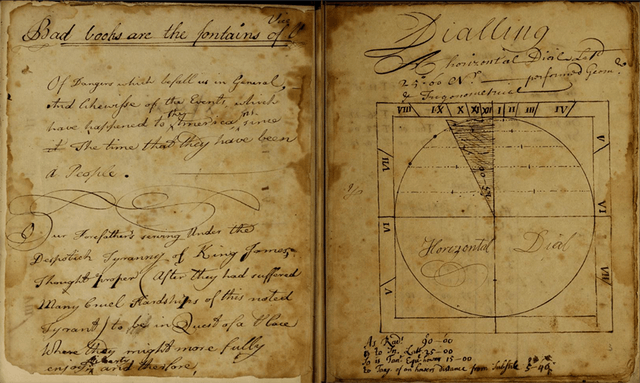
James Blake’s commonplace book on constructing sundials (1745).
Recently, a student raised their hand to ask a question I am sure the modern teacher gets asked all too often. I was copying key terms onto the whiteboard; nothing elaborate, just the scaffolding they would need for the essay. They asked if they could photograph the slide instead of writing it down.
There is nothing unusual about the request. I receive it perhaps three to four times a week. What struck me was that I hesitated before answering. Not because the request was unreasonable (it was entirely practical) but because the hesitation itself told me something. It revealed an assumption I hold about what note-taking is for, one that the student clearly does not share, and one that the school system has largely stopped insisting upon.
I said yes, reluctantly, as we were reaching the end of the lesson. The information was captured, and loosely promised to be rewritten into the book later by the student. And yet I felt something had been lost in the transaction; something difficult to articulate without sounding like I was mourning a pen. This article is about what that feeling actually means.
A Different Kind of Keeping
Between the fifteenth century and the early twentieth, educated people kept commonplace books. The phrase sounds almost archaeological now, which is strange, because the practice was fundamentally about how to think.
Into these books (unlined, personally indexed, organised by each keeper's own logic) people copied passages by hand. Fragments of poetry. Observations from letters. Sentences from reading that had arrested them mid-page. A businessman might sit in the evening and transcribe a classical passage into the margins of his records. A scholar would cross-reference observations across hundreds of pages. A woman would note, in her own hand, something she'd overheard, something she'd realised, something she wanted to remember not because she might need it but because it had altered her thinking.
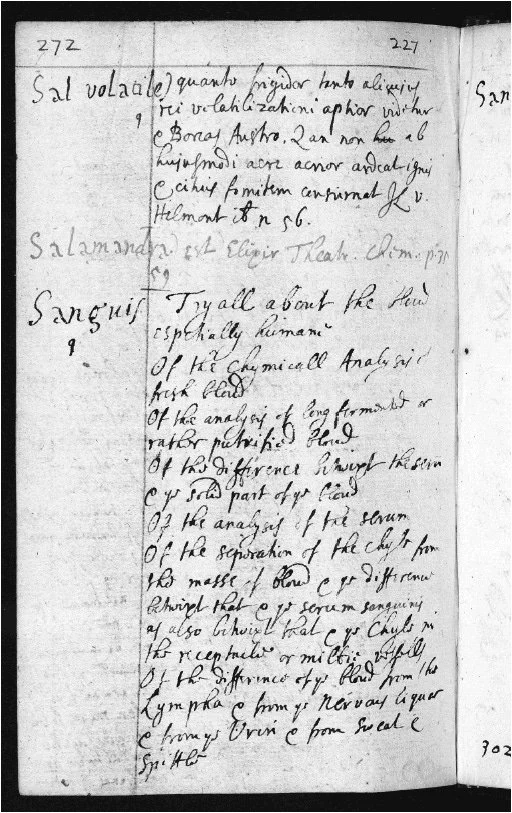
British Englightenment philospher, John Locke (1632-1704), set out to design the most useful method for organising a notebook.
John Locke's runs to thousands of entries, organised through a filing system of such efficiency that scholars still study it as an early information-management technology. But this was not mere storage. Virginia Woolf's contain compressed scraps that reappear, years later, in her essays; transformed, absorbed, made hers. Thomas Jefferson kept legal and literary commonplace books from which scholars can trace the development of his moral and political thinking; the passages he copied were not passively absorbed sources but ideas he engaged with, tested, adapted, and sometimes argued against.
The mechanism mattered more than most people now understand. Writing something out by hand; the specific cognition required, the pace enforced by the body, the necessity of choosing what to include; is not simply a more archaic version of typing or photographing. It involves something different in the brain. The hand slows the eye down. The decision to copy is itself a decision about what matters. You cannot transcribe a sentence without, at some level, inhabiting it. Your handwriting around it becomes a form of annotation even before you've written commentary.
The value was never in the storage. It was in what happened while you were deciding whether something was worth keeping, while your hand was forming the words, while you were, months or years later, returning to what you'd written and discovering that it meant something different now than it had before. These notebooks preserve thought before it becomes achievement. They are the record not of what people knew but of how knowledge formed itself in a human mind.
What the System Became
The commonplace book is gone. This is not a nostalgic observation about changing fashions or generational habits. It is structural. The logic of contemporary schooling does not accommodate it.
The architecture is modular. Qualifications are unit-sized. Each scheme of work moves through material in a linear progression, and the examination sits at the end of it. You study the Restoration, you sit the paper in June, you move into the nineteenth century. The knowledge was genuine. The learning was real. But the system has already moved forward. There is no point at which the curriculum asks you to return to what you once found difficult and discover it has changed. There is no space designed for the slow accumulation of ideas into something resembling a coherent perspective.
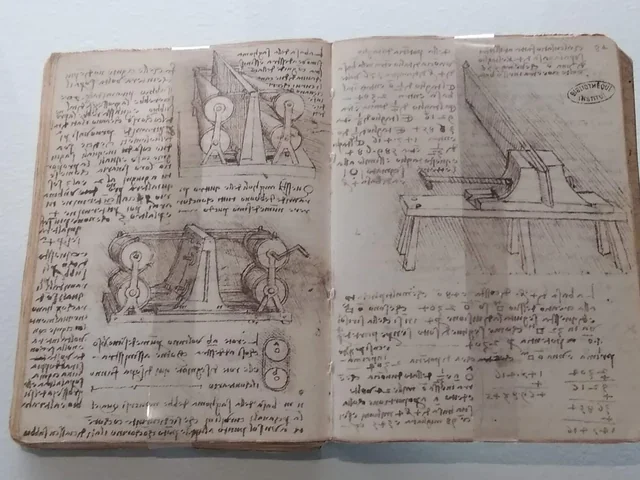
One of Leondardo DaVinci’s (1452-1519) many illustrative notebooks.
This is not malice or conspiracy. It is the entirely rational consequence of decades of accountability culture, of outcomes that must be measurable, of qualifications that need to be comparable and rankable. When education must produce evidence of itself; auditable, quantifiable, legible to external bodies; it necessarily structures time and attention around what can be demonstrated. The internal life of a student, their slow acquisition of taste and judgment, the way an idea gradually comes to seem important or foolish through repeated encounter; these do not appear in data. They resist the mark scheme. They cannot be proven. And so, without anyone making the decision to abandon them, they ceased to be what the system asked for.
What replaced them was note-taking as a retrieval tool. When schools teach note-taking; and many do not; they teach Cornell notes, knowledge organisers, revision cards, flashcard applications. These are functional tools, optimised for a single purpose: getting information back out of the memory at examination time. A revision card asks: can you retrieve this? A commonplace book asked: what do you make of this? They are aiming at different destinations entirely.
The Outsourced Decision
Beneath this sits a larger shift, one that has occurred without much notice being taken. The intellectual labour of curation; of deciding what is worth keeping, what connects to something else, what matters; has been displaced elsewhere.
Algorithms now decide what surfaces in a feed. Search engines retrieve on demand. Artificial intelligence can summarise, synthesis and organise in moments. The work that the commonplace book required; selection, organisation, personal synthesis, return; is precisely the cognitive work that the contemporary environment has made unnecessary. You need not decide what matters when recommendation systems will identify relevance for you. You need not retain anything when everything is searchable. You need not sit with contradictions or work through confusion when a tool will resolve them instantly.
The student photographing the board is not being idle. They are being rational. They have adapted to a world in which the labour of curation has been outsourced, in which the act of keeping has become optional, in which the function of writing something out; to inhabit it, to make it yours; no longer forms part of what the system expects of them.
The Real Loss
But here is where the argument becomes harder than simple regret. The commonplace book cannot be simply restored. It belonged, in its formal iterations, to a world of radical privilege; to people with time, with access to books, with permission to read slowly. There was no golden age in which the majority of people kept them. That age never existed.
Yet it is worth noting that women, often excluded from formal education, sometimes used commonplace books as a route into intellectual life that institutions would not grant them. These notebooks could hold literature, theology, ethics, medicine, observation, and political thought alongside the domestic. They were unofficial intellectual spaces, created in the margins of what women were formally permitted to study. This does not erase the elitism of the practice. It complicates it.
And there is an objection that cannot be dismissed. The student in my lesson, studying four subjects whilst working on Saturday afternoons, does not have uncommitted time for a leather journal and borrowed texts. The teacher, already swallowing marking and data entry and the endless administrative weight of contemporary schooling, cannot design curricula around practices the exam board will not reward. The practical constraints are real.
So the argument is not for the return of commonplace books. It is harder than that, and more uncomfortable. It is this: the function those books served; the slow, deliberate, personal encounter with an idea; has vanished from education. The system no longer asks for it. The system no longer believes it is its business to ask. And because nothing has been explicitly abandoned, because there was never a moment of conscious decision, most people inside schools have not noticed what was lost.
What Happened to the Question
Beneath every system of education sits an unarticulated question: what is a student becoming? Not what are they learning, not what grade will they earn; what kind of person does this education ask them to be?
The commonplace book, whatever its exclusions, offered an implicit answer. It said: you are becoming someone with an interior life shaped by your encounters with ideas. Over years, you accumulate a sensibility. You learn what seems to matter. You develop opinions not from being told what to think but from sitting long enough with difficulty that your own judgment emerges. You become, in some sense, a person.
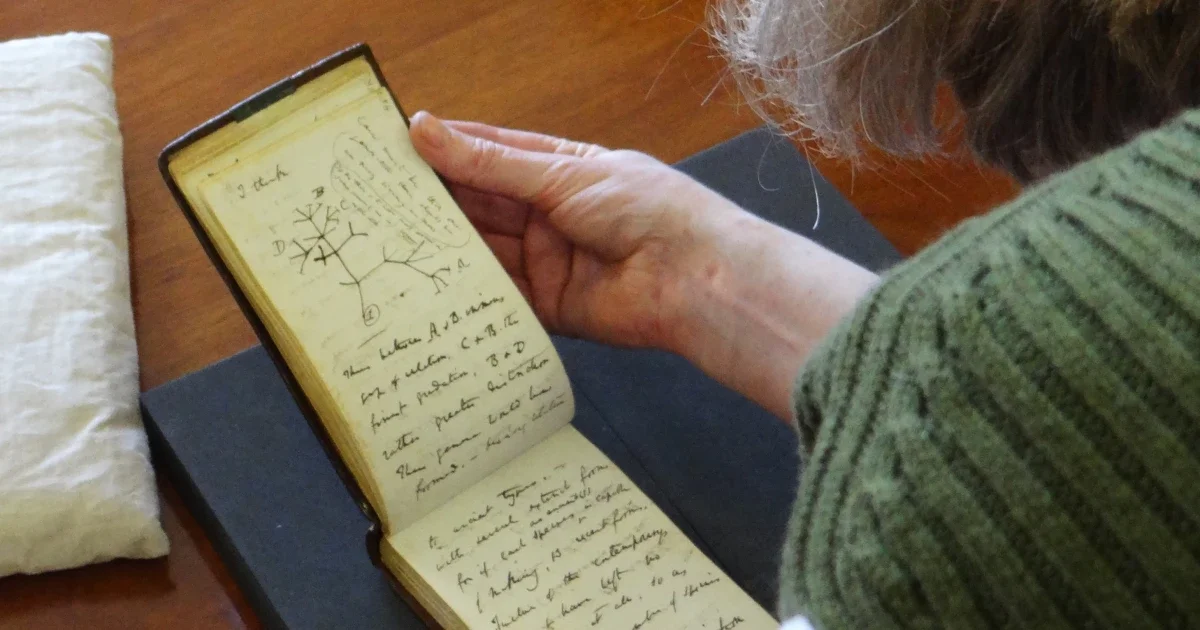
Darwin’s long lost notebooks on his ‘tree of life’ sketches, mapping out his theory of Natural Selection. (Stuart Roberts, Cambridge University Library)
The educational system of the present has replaced this with something narrower. It does not say this openly. But the structure makes it clear: you are becoming someone who can demonstrate specified competencies at specified moments to specified external standards. This is not valueless. Competence matters. Standards have their place. But somewhere between the pressure to measure, to evidence, to produce legible outcomes, the older question has been displaced. Not explicitly refused, but made increasingly beside the point.
The student asking to photograph the board was not being disrespectful. They were simply naming the logic that the system has already accepted: if the goal is to capture and retrieve the information, then the photograph is more efficient than the handwriting. And the system has no good answer to this, because it has stopped insisting on anything beyond the efficient capture and retrieval of information.
What has been lost is not the notebook. It is the expectation that you might do something with an idea. That you might return to it. That sitting with something difficult enough to write it out, in your own handwriting, alongside what else you've been thinking about, might change what you understand. Darwin's transmutation notebooks preserve the emergence of evolutionary thought through scattered observations and speculations, recorded not yet as polished theory but as a mind becoming scientific. This is what happens when you keep ideas alive long enough for them to alter. That you might, over time, become someone worth becoming.
That expectation is the ghost. And it walks the corridors of every school in which knowledge arrives, is processed, and is forgotten; and no one any longer thinks to ask what the student was supposed to become from the encounter.