

Education After the End of Certainty
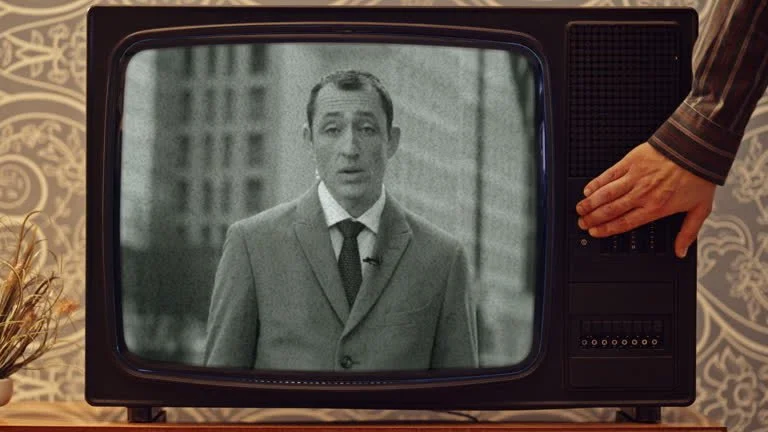
When knowledge had a centre, everyone tuned in.
For much of modern history, education rested on an assumption so deeply held it barely needed stating: that the world is knowable. Knowledge could be stabilised and wielded by society for its betterment, and schooling was the mechanism by which this knowledge was passed on intact. Curricula were built as sequences and exams measured mastery; authority flowed in one direction from knower to learner.
Even when disagreement existed, it was bounded by a shared confidence that truth itself was not in question. Thomas Kuhn challenged that confidence as early as 1962, arguing in The Structure of Scientific Revolutions that knowledge does not progress smoothly but lurches through paradigm shifts; moments in which entire frameworks of understanding are overturned. Education, largely, looked the other way. However, that confidence is quickly dissolving. And the institutions once built to transmit certainty have not yet figured out what to do in its absence.
The Age of Transmission
Modern schooling was designed for a world in which knowledge existed "out there," already formed and already validated. The task of education was to select what mattered, arrange it in a logical sequence, and deliver it efficiently. The student's role was to absorb what had been handed down and, eventually, to apply it. This model made sense in industrial societies that valued standardisation, predictability, and control. It aligned with the rise of national curricula, high-stakes examinations, and credentialism; and with a world in which knowledge changed slowly enough for institutions to keep pace.
Even progressive reforms operated within this same epistemic frame. They argued passionately over how knowledge should be taught; the role of discovery, the importance of student voice, the dangers of rote learning; but rarely questioned whether knowledge itself might be unstable, contested, or incomplete. The ground beneath the classroom seemed too solid to interrogate. But today, that ground is shifting.
When Knowledge Loses Its Weight
Consider what a teacher faces on an ordinary morning. A student raises a hand and challenges a claim made in the textbook; not with demonstrable apathy, but with a link to a video that presents an alternative account of facts. The teacher knows the video is misleading. But explaining why it is misleading requires more than simply asserting authority. It requires a conversation about how evidence works, about what makes a source trustworthy, and about why some claims survive scrutiny while others don't. That conversation was not part of the lesson plan. It was not on the exam. And there is no time for it, because the curriculum moves forward. Rather than an exceptional moment, this is something rather routine.
The challenge is not simply that misinformation exists; falsehood has always existed — but that the mechanisms for distinguishing truth from noise have weakened in ways that reach into the classroom. Authority fragments. Trust erodes. And the speed at which information now travels means that verification can rarely keep pace. Students arrive already holding information, but without reliable tools to weigh it. They question why certain texts matter, not because they are disengaged, but because relevance is no longer self-evident in a world where competing narratives arrive faster than any institution can respond.
And yet assessment systems continue to reward certainty: the right answer, the clean paragraph, the well-rehearsed response. Ambiguity is treated as weakness, and hesitation is penalised. When grades are on the line, intellectual risk becomes something students learn to avoid rather than practise. Education, in other words, asks students to perform certainty in a world that no longer reliably supplies it; and in doing so, it teaches them without ever saying so that doubt is a flaw rather than a skill.
The Moral Dimension
There is an ethical dimension to this gap that is often overlooked. When education pretends certainty where none exists, it does more than mislead — it erodes trust. Students are not passive. They notice, eventually, the distance between the world described in textbooks and the world they encounter outside school. When institutions refuse to acknowledge that distance, credibility collapses. And once credibility collapses, it does not rebuild easily.
Teaching with honesty about uncertainty is, in this sense, a form of respect. It treats students not as vessels to be filled, but as emerging participants in an intellectual project that is genuinely unfinished. In an age defined by polarisation and epistemic anxiety, this may be one of education's most important civic functions; not the transmission of settled knowledge, but the cultivation of minds that can engage with knowledge responsibly, even when it is contested.
The Rise of Artificial Fluency
Artificial intelligence sharpens this crisis in a specific and revealing way. Tools that generate essays, explanations, and arguments with ease have exposed something that educators have long suspected but rarely confronted directly: much of what we assess is not understanding, but the performance of understanding. A well-structured paragraph, a coherent argument, a fluent summary; these are the surface features of knowledge, and machines can now reproduce them without any of the cognitive struggle that supposedly produced them.
This does not render education obsolete. But it forces a reckoning with what education was actually measuring in the first place. If a student submits an essay that is well-organised, grammatically precise, and thematically coherent; and it was written by a machine; what exactly has been lost? The answer reveals the fragility at the heart of traditional assessment: we have been rewarding the appearance of thought rather than thought itself — fluency without depth, structure without the struggle that gives it meaning. The tools did not create this problem. They simply made it visible.
The honest response is not to build better detection systems, but to ask what education should look like when the performance of knowledge can be automated. If machines can produce the answers, then education must concern itself with what cannot be easily replicated: judgement, discernment, ethical reasoning, and the capacity to sit with uncertainty without collapsing into either cynicism or false confidence.
From Certainty to Orientation
Perhaps the task of education is no longer to provide certainty, but to offer orientation — and the two are more different than they first appear.
Orientation does not promise stable answers. It offers reliable ways of navigating complexity. It values the ability to weigh evidence, recognise the limits of one's own knowledge, revise beliefs when confronted with better reasoning, and hold competing perspectives without panic. The educated person, in this view, is not the one who knows the most, but the one who knows how to know — when to doubt, where to look, and how to act responsibly in the absence of certainty.
This demands a real shift in pedagogy. Teaching under conditions of uncertainty is uncomfortable. It requires educators to relinquish some authority; not by abandoning expertise, but by modelling epistemic humility. It means being willing to say "this is contested" or "we don't yet know," and showing students, explicitly, how reasonable people arrive at different conclusions from the same evidence; and why that process is not a failure of knowledge but a sign of its vitality.
Such moves are risky in systems obsessed with measurable outcomes. They slow coverage, complicate assessment, and resist the kind of standardisation that makes large-scale education manageable. But they may be the only honest response to the world students are actually inheriting; a world in which the ability to think carefully matters more than the ability to produce a correct answer.
Classrooms that make room for uncertainty do not descend into relativism. On the contrary, they often become more rigorous. Claims must be justified rather than simply stated, and sources must be interrogated rather than taken on faith. Reasoning has to be made visible, so that errors can be identified and corrected. Certainty, when it genuinely appears, must be earned; and that distinction is itself one of the most important things a student can learn.
After Certainty
Education after the end of certainty does not abandon knowledge. It repositions it. Knowledge becomes provisional, contextual, and alive; something to be worked with, questioned, and revised, rather than stored away and reproduced on demand.
But repositioning knowledge is not the same as solving the problem. The institutions that deliver education; schools curricula, examinations, credentialling systems; were built for a different epistemic world. Rebuilding them for this one is not a matter of updating lesson plans or adding a media literacy module. It requires a fundamental rethinking of what education is for: not the securing of certainty, but the preparation of minds to meet a world in which certainty is not available on demand.
Whether that rethinking can happen, and whether it can happen fast enough, remains genuinely open. The epistemic ground continues to shift. The tools that expose the fragility of old assumptions keep arriving. And students keep walking into classrooms that were not designed for the world they already inhabit. The gap between what education promises and what the world delivers is not closing. It is widening. And the longer institutions pretend otherwise, the harder it will be to close.
